
EMDR Taught Me To Cry
Even at owl memes

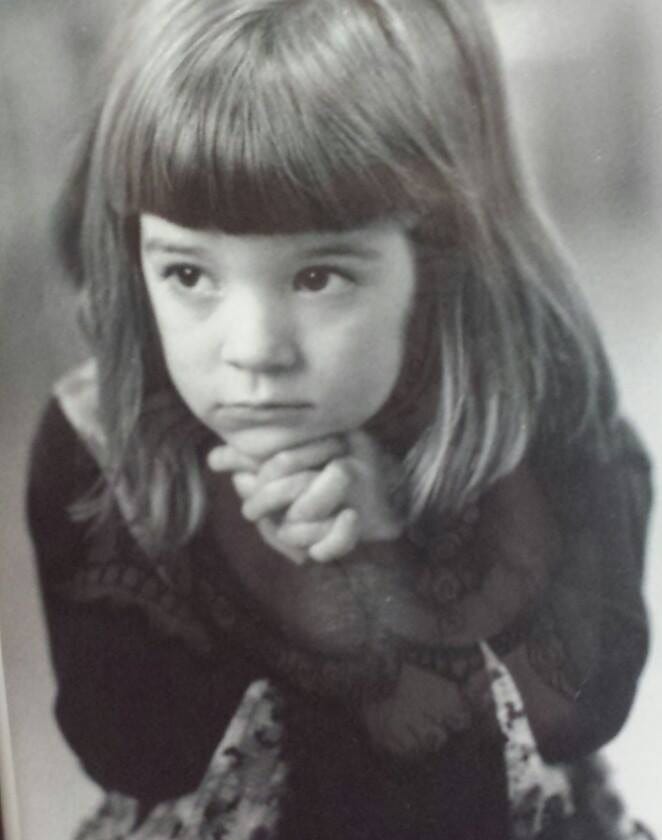
I was never a big crier. Even in childhood, I was stoic stiff, dissociating into a pretend world when I fell and scraped a knee. “I’m Dorothy,” I would say to my parents, pretending to be on a journey to Oz—both an affirmation of my bravery and to prevent real emotion from leaking through. It’s not my business to analyze it from a psychological standpoint, I do enough of that to myself every day and for others at work. I used to wear my lack of tears as a badge of pride, the way women do that shitty high school thing where they say, “I’m only friends with dudes, girls are too much drama.” I would boast, “I probably cry like once a year, maybe twice,” rolling my eyes at those who cried at the drop of a hat.
I would sit with the pain of the lump in my throat at the movie theater with my parents. If I did cry, I would pray that the credits didn’t roll too soon to allow me to hide how moved I had been. This hardness showed that I had ultimate control over myself. When I did cry, I worried it would never stop. That I would not be able to go to school that week because I’d be crying. I would catch a glimpse of myself in the mirror while I cried, or look at my face in the selfie view on my phone, a way to take one step further back from the moment. Often, as soon as I made eye contact with myself, the tears would stop. I’d be left frozen again, nose and eyes red and lashes dewy, my body falling silent.
I started EMDR in February of this year. The last memory we fully processed was a big one: the separation anxiety I suffered from as a child upon entering preschool. In EMDR, you begin “setting up the memory” for processing by picking an image, a snapshot, to represent the worst moment of the memory. Little preschool me with the full leg braces, standing in a room with impossibly high ceilings (my preschool was in the local synagogue), the day stretching ahead of me, bleak and terrifyingly, without my parents. The other kids were playing house with the little plastic kitchen. I was alone sorting items by color and size. My parents provided me with a laminated bracelet to wear, fastened with velcro, with their pictures on it, to look at when I got lonely or scared. My therapist asked me what feeling and belief comes up when I imagine that memory. Fear, confusion, and a belief of “I can’t make it through the day.” This had become a refrain for years in my hardest times, the day stretching before me, bleak and terrifying.
As we began the bilateral stimulation of EMDR, I noticed the feral fear in my chest, the heaviness in my stomach, the icy freeze of “don’t touch me, don’t notice me, don’t help me!” The teachers meant well. They were warm and caring, but I didn’t want them to check in with me because if they did, I might lose it. I learned to fly under the radar as a wax figure with a stiff expression and a close mouthed smile. As we continued to process, my body allowed for some openness. Maybe I could speak up to my teachers and tell them I’m scared and lonely. Maybe their help wouldn’t expose me, it would make me feel safer. I could remember standing at an easel and finger painting, an activity I liked that didn’t make me feel isolated. The belief transformed to “I can speak up for myself.
I no longer pride myself on my lack of tears. I have long jokingly blamed it on my dose of Zoloft, but unlocking and rewriting some of these negative beliefs has also unwedged a dam that was built almost immediately upon becoming a conscious human. In the last week since we processed that memory, I have cried three times. I cried in my partner’s arms twice, once in a moment of misunderstanding and frustration, and once in a moment of gratitude and love. The third time, perhaps most importantly, I cried about a meme.
I can’t find it anymore, but it was a meme about a baby owl being afraid of their mom leaving the nest. The answer to the baby owl was reassuring and sweet, along the lines of “an owl mom will never leave without coming back; if she is not in the nest, she is probably protecting you or finding food. Just hang in there and she will return!” The tenderness of the baby owl’s fear and loneliness, along with the comforting reassurance struck me so deeply that I sobbed into my partner’s half asleep back. I found myself trying to prevent myself from crying at the meme, invalidating my feelings and feeling shame rising. My partner told me it was ok to cry about the meme and I let go completely.
It feels scary to be in this new tender and feeling brain. I already had so many feelings, but perhaps I wasn’t actually feeling them and a lot of them were being redirected and misfired due to shame or this insistence of stoicism. My brain is rebuilding itself to be kinder, gentler, and more compassionate to myself and others. EMDR can sometimes make you feel like a raw nerve, exposed to the world, but I can tell it’s in service of something truer.
I love this. EMDR can be so amazing. And also, crying. I love the idea of the bracelet with your parents' face 💔 and I think that owl meme would be a great tattoo...